Thursday's Columns
October 29, 2026
Letters to the Editor:
Dear Editor:
Thank you for last week's "Our Story" Column. The Ghost Deer was a revelation to me. I have felt its presence many times on the highway but never had a name for it. I also appreciated Jimmy Schitsu's philosophy of doing no harm and staying focused on the next intersection rather than getting distracted by anger and fear. Simple advice, but profound. And seeing the plaque for one million accident-free miles makes the lesson even more powerful. That is a remarkable achievement and a testemant to the wisdom behind the story.
Anna Kanski
Denver, CO
--30--
Our
Story
by
Lawrence Abby Gauthier
ace reporter
The Westphalia Periodic News
In the Beginning was the Word…
Words are like dishes — wash them one by one and before you know it the last one’s done, stacked in the cupboard in their proper place.
But first things first. One thing at a time. Open my eyes. Stretch. Locate the aches after sleeping on my side.
Then rise and shine.
Pet the cats.
A cup of coffee.
Time to go to work. One word at a time. Think of something new. Do a little dance on my Dell laptop computer. Save the world in 700 words of perfect grammar, give or take a few. Breaking news! There’s enough for everybody and everybody deserves to have enough. Warring tribes, go back to your neutral corners. Think about what you do.
Last night, Culley Jane and I attended a Colorado Chorale performance of Felix Mendelssohn’s Symphony No. 2. I know some things about the Mendelssohns. A character in my will-it-ever-be-finished novel is based on Felix Mendelssohn’s sister. Her name was Rebecka Mendelssohn, and my character’s name is Rebecca Mendelsohn.
They both grew up in Jewish families — Rebecka in Berlin in the early 19th century and Rebecca in Brooklyn in the years following WWII. Each faced the same haunting question, where do I belong? Were they homeless in the world, a wandering tribe of Jews, or was their home where they lived, putting down roots — a “German” Jew and an “American” Jew? Some Jews, “Zionist” Jews, said their only home was a strip of land on the eastern coast of the Mediterranean. Like his sister, Rebecka, Felix Mendelsson chose to jump the fence around this interpretation of the Torah. The Promised Land, he decided, could be anywhere, even in the churches of “non” Jews.
Last night’s concert was held in a large Lutheran church beneath a towering gold-colored cross. According to the glossy program handed out before the performance: “Mendelssohn was commissioned in 1840 to compose a piece for celebrations in Leipzig marking the 400th anniversary of Gutenberg’s development of movable type printing in Europe.”
In the beginning was the Word and the Word was made Flesh.
In the program notes, the Colorado Chorale’s Artistic Director, Dr. Kevin T. Padworski, described the piece as movement from darkness into light.
I think I’ll make an apple pie today. But first do some raking in the yard, one autumn leaf at a time.
--30--
Be a Dolly
by
Anna Kaski
Denver Confluence Writers
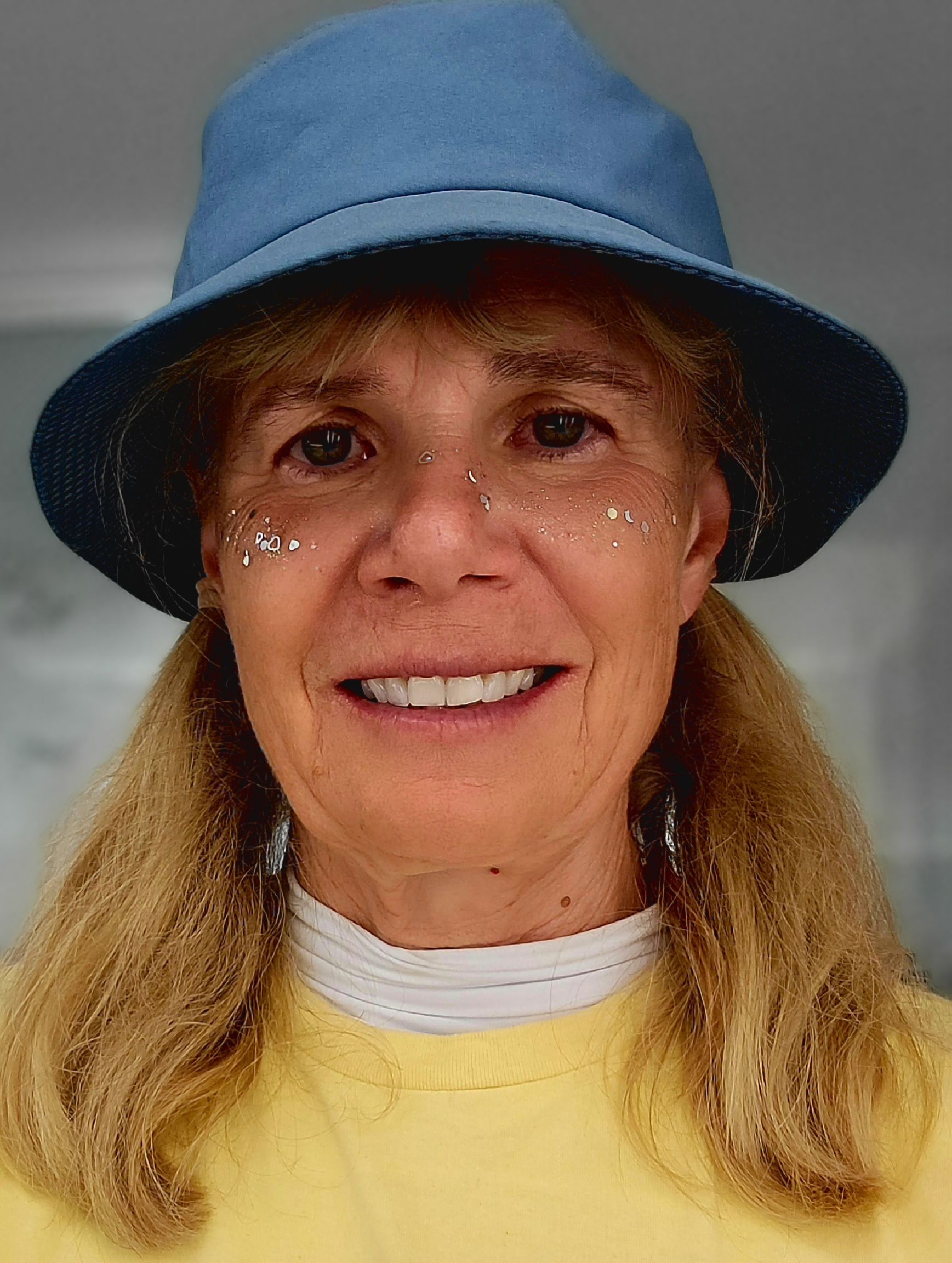
Anna Kaski
I grew up listening to Dolly Parton.
My mother played Dolly records on a giant stereo console that occupied what felt like half our living room. Sometimes I would hear her singing from the kitchen while she chopped vegetables, thinking nobody was listening.
As a little girl who adored her mommy, I loved whatever my mom loved.
Dolly was sparkly, like the Barbies I played with, and she made my mom smile.
When Dolly Parton died, social media was filled with viral tributes. Everyone seemed to be saying the same thing. There would never be another Dolly. The sentiment was heartfelt, but after a while it began to feel strangely incomplete.
Dolly spent her life helping people.
Surely the best response to a person like that was not simply to miss her. Maybe what people loved most about Dolly was not that she was one of a kind. Maybe it was that she showed the rest of us what kindness could look like.
The older I get, the more grateful I become for the sparkly Dollies who appeared along the way.
I met my first Dolly when I was in fifth grade. My sister and I were dropped off at Copper Mountain ski resort to meet our school's ski club. Our parents headed back to Denver while we spent the day skiing. We were supposed to return on the bus with the ski club.
That day, school bus drivers unexpectedly went on strike. The school bus that was supposed to bring us home never arrived.
As fifth graders often do, my sister and I devised a bold plan. We decided we would simply catch a Greyhound bus home. The plan almost worked. We were short a dollar.
At the bus stop, we explained our situation to a young woman who seemed impossibly grown-up to our fifth-grade eyes. She listened for a moment, reached into her purse, and handed us a dollar.
No lecture.
No questions.
No request to pay her back.
Just a dollar and a smile.
At the time, it felt like magic.
Fifty years later, I understand it differently.
It was kindness.
It was one of the first times I experienced kindness from a stranger.
I can still see her reaching into her purse.
She was a Dolly.
Another Dolly appeared while I was eating lunch under a shade tree in a park.
I was sitting at a picnic table wearing a summer dress when I felt a sharp sting on my back. Then another. Then another. It took a moment to realize something had somehow crawled inside my dress. The pain brought tears to my eyes and did nothing to improve my composure. Unfortunately, I could not reach the creepy-crawly.
As luck would have it, the only other person in the park was a young man with orange curly hair eating lunch at a nearby picnic table.
With dignity leaking with each tear, I approached him and explained my dilemma.
He immediately stood up to help.
Pulling back the dress fabric, he discovered the culprit: a large green caterpillar covered in tiny blue spikes. Without hesitation, he grabbed a clean napkin, carefully reached down the back of my dress, and extracted the unwelcome guest.
The relief was immediate.
I apologized for interrupting his lunch and offered to buy him another. He smiled and said he usually worked through lunch, thanks anyway. Then he sat back down and finished his sandwich as though rescuing strangers from wardrobe-related insect emergencies was a perfectly normal part of the day.
He was a Dolly.
A few years later, I became a young consultant. I was exhausted from long hours, constant travel, and the confidence that my twenty-something self could survive on extraordinarily little sleep.
One day, I left my company laptop on the Chicago El. Realizing what I had done felt like watching a disaster unfold in slow motion. Losing the laptop was bad enough. Having to admit I had lost it felt even worse. I worked with people who seemed impossibly competent. They rarely appeared to make mistakes.
I wanted to disappear.
My stomach turned.
I could already imagine the conversations that would follow.
Then my phone rang.
Somehow, a stranger found the laptop and used the contact information taped to it to call me. When I offered a reward, the person declined. When I offered to buy dinner, the person declined. The only thing they would accept was a promise.
"Pay it forward."
The stranger offered grace to a tired young woman who had made a mistake. That simple act saved me from embarrassment, expense, and an uncomfortable conversation at work. I never learned much about the person who returned it. I only know he chose kindness when he had every reason to keep the laptop for himself.
He was a Dolly.
For a long time, I wished I could find and thank people like these properly.
The woman with the dollar.
The young man who rescued me from a spiky caterpillar.
The stranger who returned my laptop.
None of them knew me.
Yet all these years later, I still remember their kindness.
Eventually, I realized something.
The best way to thank a Dolly is not to find them.
The best way to thank a Dolly is to become one.