Thursday's Columns
April 9, 2026
Fiction
by
Craig Chambers
Denver
Confluence
Writers
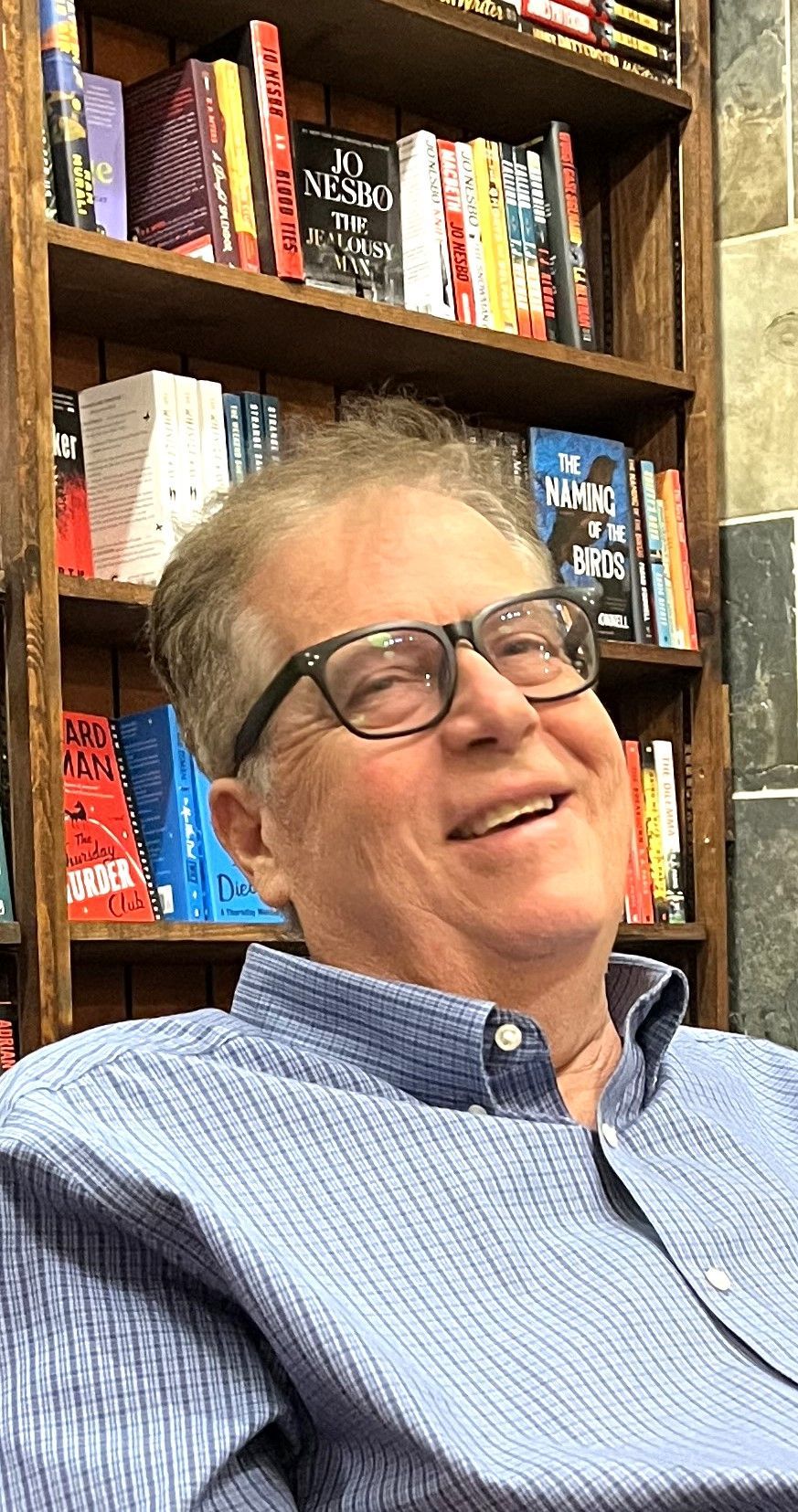
Craig Chambers
Just Five Words
My daughter, Suzanne, she has to write an essay for her law school application. No more than 1,000 words. She needs to submit the essay, the application fee, a transcript of her grades, her LSAT score, and a few letters of recommendation.
Law school is not as easy as it seems. They don’t accept just anyone. It’s a job for future leaders, a job of high esteem. There’s a lot of reading but, luckily, no math. Long hours at the library. The classes. Trial practice and or moot court. The lengthy exams. The burn-out rate is high. In her essay, she needs to give a reason.
She could write about her outrage with the legal system. The injustices she observed as a child. Her personal fight against these injustices. She could write about the LGBTQ or women’s rights. Her belief in the Bill of Rights. About how the legal system shouldn’t be just for the rich — and the poor and disadvantaged deserve a fair trial, same as anyone else.
Suzanne struggles over her essay, reads it, lets it sit, reads it again. Then edits it. And edits it some more. She’s already learned that shorter is usually sweeter. Shorter is harder, it takes longer. It’s always more persuasive.
Her final draft is just five words.
Question: “Please explain specifically why you want to attend law school?”
Answer: “Because I married a musician.”
--30--
Our
Story
by
Lawrence Abby Gauthier
ace reporter
The Westphalia Periodic News
I asked my friend David Dvorkin what he thought about our recent journey to the moon. I was surprised by his answer. He said it was sad.
David is a few years older than me. While I was in a small college way up north in the late 60s, he was already a NASA engineer when we first started going to the moon. He was young and enthusiastic, on the ground floor of an exciting new chapter in human history — space travel.
But then we stopped going to the moon.
And now, fifty years later, in the midst of wars, we’ve gone back, to circle it.
Sitting at his kitchen table, David said that when he thinks about what could have been, it makes him sad. By now, it could have been a weekend vacation spot, Helium 3 mines to fuel thermonuclear fusion reactors, exoplanet scientific research centers, a way station on the way to all that lay beyond… and when he thought about it, it made him sad. For fifty years he’s wondered why. Why did we stop going to the moon?
I think I know why.
I think it was because people got to believing in things that made no sense; like in a new religion based on the pre-Enlightenment ontology of limited resources in a world of selfish desires.
I first encountered early missionaries for the new religion during my college years. Like me, most of the students at Northern Michigan University were “Yoopers,” from small towns at the edge of the woods. The missionaries came from the big cities. They wore beads and sandals. Their off-campus pads always smelled like Sandalwood incense. Psychedelic posters hung on their walls — Baba Ram Dass… “BE HERE NOW”… “ALL IS ONE.”
They’d gather in forests chanting “OMM… ,” following the rules, all is one, no we nor thee, all in cosmic harmony; careful not to disturb, or to even touch the sacred tree like we dared not touch the Eucharist when we were kids in Catholic schools.
The New Age priests condemned our trips to the moon, calling them an expression of toxic male egos… “Be Here Now!” they’d shout through bullhorns in the middle of growing crowds. They started attracting big money — the Rockefeller and Ford Foundations. Think tanks got on board — the Council on Foreign Relations, the Club of Rome. Cronkite started airing clips of their speeches. We stopped going to the moon.
Right from the start, I didn’t trust the new religion.
I grew up in one of those small towns at the edge of the woods. Nature was 20-below in winter and then woodticks and thorns and biting insects. It was the place where you’d die if you ever got lost. By transforming it, we turned it into something that was not so scary. We built paths, lining them with small rocks. We made campfires and ski jumps and treehouse forts where we imagined we were space travelers on another planet.
Sitting at his kitchen table over coffee, I said to my friend David Dvorkin: “Maybe this time we’ll keep going back.”
He nodded, but I could tell he wasn’t so sure.
Oh, but I'm the optimist. I'm sure we will. Others are going to go with or without us.