Thursday's Columns
February 12, 2026
Code
The Arkansas Guy
Our
Story
by
Lawrence Abby Gauthier
ace reporter
The Westphalia Periodic News
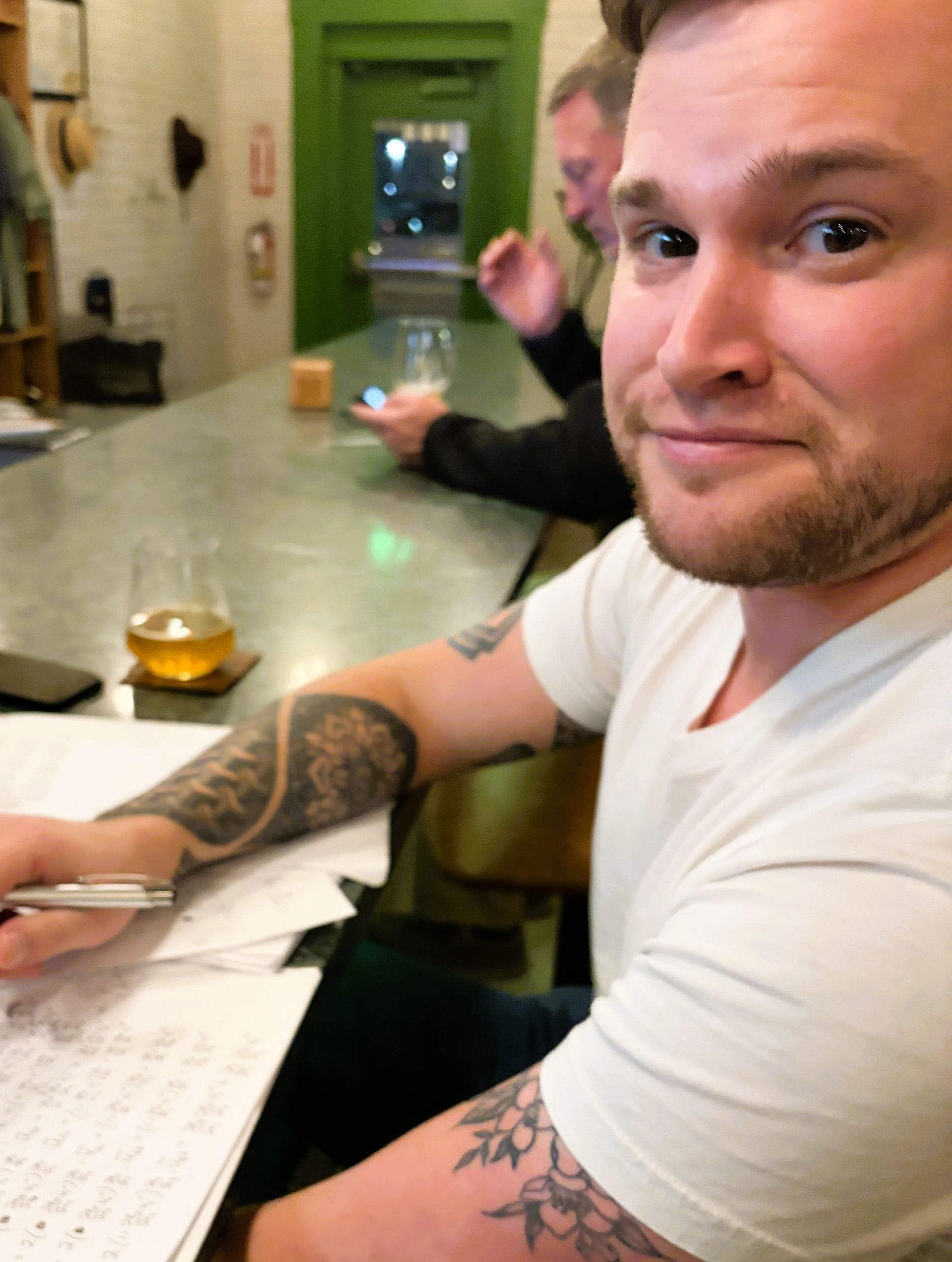
Met a guy at the bar last night. Younger guy. Solid arms. Tattoos. In the old days, only Navy vets had tattoos, anchors and hearts.
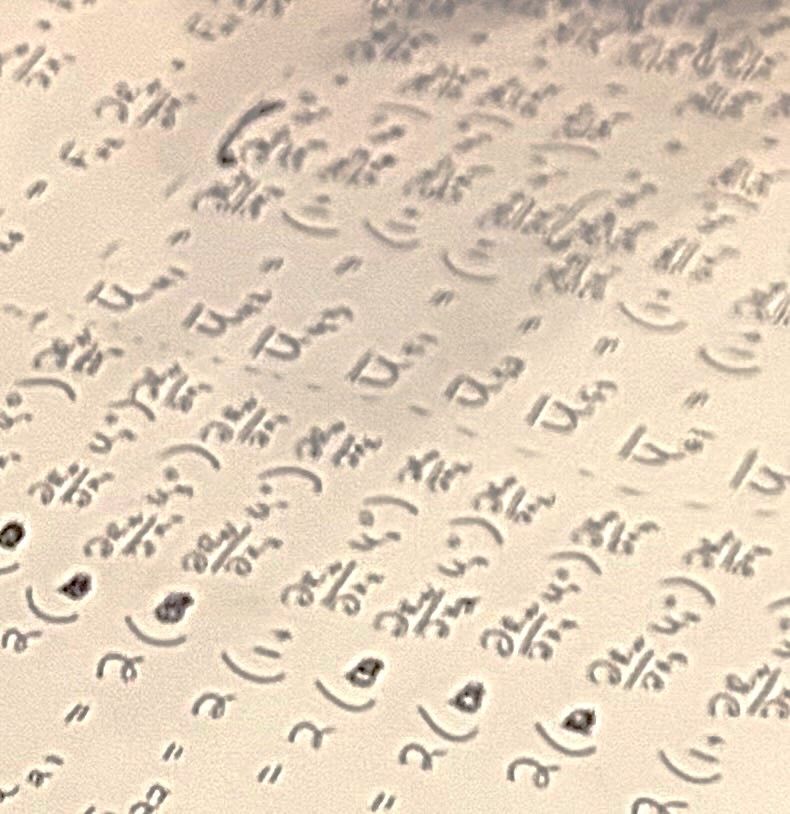
What immediately and dramatically caught my attention was what he was writing on sheets of paper he had spread out on the bar top in front of him.
I said to him: “What’s that you’re writing there? Looks like hieroglyphics.”
Of course, I knew what he was writing. Code.
“Mathematics,” he said, looking up at me with a country boy smile.
I asked him what I ask everybody I meet for the first time. “Where you from?”
“Arkansas,” he said.
“Where ‘bouts in Arkansas? When I was a trucker I always liked being in Arkansas. Spent lots of nights at the truck stop in Hope, where Clinton grew up.”
“Fayetteville,” he said.
“Northwest corner. Know it well. Walmart’s world headquarters. Couldn’t tell ya’ the number of loads I picked up there. Beautiful country, northwest Arkansas… touching the Ozarks, hills and trees and streams.”
I refocused my line of sight back to what he was writing. “I’m guessing you went to college and studied the mathematics of computer code. Do you know calculus?”
The question seemed to surprise him, coming from an old timer who’d been an over-the-road trucker. “Yes. Do you?”
“No,” I said, “but I know about the philosopher who invented calculus.”
He threw me a trick question to see if I really had any idea about what I was talking about. He said: “Which one?”
“Leibniz,” I said.
“Interesting, he said. “Why?”
“I couldn’t tell you mathematically because I didn’t study that language in college. I wanted to be a writer, not a mathematician. I was more interested in the lives lived by famous writers before they were famous and philosophy and history and big ideas. That’s where I first encountered Leibniz.”
“So you say it was not Newton?”
“Like I said, I came at the Leibniz-Newton debate from a philosophical angle. They were competing ontologies, views about what’s really real, that kind of stuff. When you peel everything away, what do you come up with? Newton said atoms. Leibniz said monads. You ever heard of monads?”
The bartender brought my beer and a glass of wine for Culley Jane who was over at the table with the others, a Happy Hour social gathering put on by the local Freedom From Religion organization. I always meet interesting people at their gatherings. I tell them I’m their token Catholic.
The Arkansas guy said he’d “heard” of monads, but really didn’t know much about them.
“They’re a hard idea to wrap your mind around,” I said. “Like God, for instance. The difference between atoms and monads is like the difference between a billiard ball and a conscious mind. Billiard balls don’t think about it but do exactly what they’re told to do depending on the laws of the angle of the hit. Monads, on the other hand, decide for themselves what they’re going to do depending on a different set of rules. That’s what you’re looking for there, isn’t it? You’re looking for a new set of rules to get you to where you want to go and at each step along the way you have to make a decision with your own conscious mind, eh? Am I right?”
I’d already had a couple of beers and was on a roll.
“But tell me,” I went on, “where do you want to go? According to Newton’s ontology, it all ends in the motionlessness of entropic death. But Leibniz, ahhh… In the last paper he ever wrote he said the idea that came closest to what he was getting at was the Chinese concept of Chi, the breath of life.”
The Arkansas guy put down his pen. “Where you from?” he said.
I nodded towards the table where my wife was patiently waiting for her glass of wine. “A Freedom From Religion Foundation group,” I said. “I’m the token Catholic. I still haven’t made up my mind.”
We shook hands and exchanged emails. Another thinker on Westphalia’s “Thursday’s Columns” mailing list. As far as I know, the first one from the northwest corner of Arkansas.