Thursday's Columns
February 5, 2026
Our
Story
by
Lawrence Abby Gauthier
ace reporter
The Westphalia Periodic News
I called my friend, Bernie, Bernie Bornstein. He’s a writer. He wrote “Blood of My Fathers,” historical fiction based on the life of North Korean Supreme Leader Kim Jong-un. Bernie is also an atheist and a Jew. In other words, an interesting guy.
I wanted to ask him what he thought about the new TicTok owners' decision to turn the word “Zionist” into a “Z-word,” like the word “Nigger” became the “N-word.” Depending on how the word is used in a sentence, it could get you banned from the social media site. You’re allowed to say, “I’m a proud Zionist,” but not “Zionists are Jews who support genocide.”
Bernie hadn’t heard about the TicTok decision. Like me, he isn’t a big TikTok fan and doesn't really know much about it. I told him I had just learned about the decision while scrolling through old YouTube videos and happened to come across an interview with TicTok USA CEO Adam Presser on a Middle East Eye podcast. The interview was conducted last May.
Bernie said he had no problem with the word, “Zionism.” He said as far as he was concerned, it just meant a Jew’s desire for a homeland, or even a Christian Zionist.
Obviously, you didn’t have to be a Jew to want that. The word “homeland” is kind of like the Greek word for “household” — Oikos, which is the root of the prefix “eco” in the word “economics.” An old Greek guy in Greektown in Detroit once told me that everybody desires their Oikos. He said: “It’s the place where you feel comfortable, where you feel like you belong and can think straight.” When I was an over-the-road trucker, America felt like my Oikos.
Just as obviously, my friend did not support genocide as a tool of social control. If he did, I don’t think we’d be friends.
Then we talked about other things. I asked him how his latest book was coming along. He recently had some surgery and he told me about that and that he was doing good and I told him that Culley Jane and I were planning a trip to Europe. I’d really rather be going to China or Russia, but she has friends in France and speaks the language.
We agreed to get together soon over a few and then said goodbye.
The conversation got me to thinking about banned words. The idea doesn’t sit right with me. Like banning books. It’s been my experience that there’s something in America’s cultural DNA that’s not comfortable with banning words. The culture pushes back. Lenny Bruce and George Carlin made their careers by saying banned words.
I once interviewed the black guy who wrote a book with the word “nigger” in the title — Dick Gregory. He’d written the book “Nigger: An Autobiography” in 1964. I met him in 1971. I was a rookie reporter at the Hillsdale Daily News in Hillsdale, Michigan, home of the ultra-conservative Hillsdale College.
Hillsdale is located in the rich agriculture lands along the Michigan/Indiana border. Lots of Amish lived there and would come into town on weekends with produce to sell in their buggies.
I covered the school board, county commissioners, city council and had the morning police beat. As a general assignment reporter, I also covered important local events, like maybe when a state representative was in town to give a talk at the Wednesday afternoon meeting of the Hillsdale Rotary Club. All this while still trying to memorize the New York Times Style Book. The city editor reminded me every day that I still had lots to learn. But then one day he called me into his office and said he thought I was ready to do a really big story. Dick Gregory was giving a speech at Hillsdale College and he wanted me to cover it. “Just the facts, the way I’ve been teaching you,” he said, “and get yourself some new clothes.”
Everybody at the time knew who Dick Gregory was. The college auditorium was packed. I can’t remember what he said, but I do remember how he said what he said… it was fiery, hilarious, cutting. The crowd went wild! Gregory was against war and injustice and everybody agreed and cheered.
After things quieted down, I joined the line of people up on the stage wanting to shake the hand of Dick Gregory.
When it was my turn, I told him my name and that I was a reporter at the local Hillsdale Daily News, just a rookie, but that I really wanted to do a good job and that the city editor trusted me enough to give me the assignment to write a story about his speech. Then, because it kind of popped into my head, I said to him: “You know, up in the small town where I grew up way up north there was not a single black family that I knew of. I’ve seen lots of blacks on television and a few when I was in college, but I’ve never before shaken a black person’s hand.”
For some reason, Gregory thought that was really funny and then it struck me that way too and we both laughed out loud and he turned to the president of the college and told him to get somebody to escort me to his room where we could talk later.
For some reason, one of the things Dick Gregory was famous for at the time was drinking fruit juice.
He was staying in a room on campus reserved for special guests. I think we talked for close to two hours. Just me and this famous guy. He wanted to know about where I grew up, and what it was like. I wanted to know about where he grew up, and what it was like. It was like we’d come from different planets where the people spoke different dialects of a common language and here we were, on the campus of Hillsdale College, drinking fruit juice together.
I raced back to the newsroom to write my story. I wanted to get it all down on paper quick before I’d lost the sense of what had just happened… the way he spoke, words rolling over one another forming higher concepts, musical overtones — the language of another land, the boyhood streets of St. Louis, the sit-ins, freedom rides and marches, Selma, Greensboro, the hissing sound of cops and crowds saying the word “niggers.”
Details mattered. Just the facts. Like where a word like "nigger" is placed in a sentence changes everything. Of course, I had asked him why he used the word so much. By 1971, hardly anybody used the word anymore. From the time All in the Family first aired in 1971 and all through the decade, Archie only said the word once.
But Dick Gregory said the word all the time out loud in front of crowds.
How come?
The way I remember it, he leaned towards me like he wanted me to know something important. “Words are history,” he said. “I don’t want people to forget.”
Back in the newsroom, I pounded the story out on my clackity Smith-Corona manual typewriter. I had to get it right in under 1,200 words, max. After some cutting and pasting with the scissors and glue pot on my desk, I looked it over one last time and decided that it was great!
I slipped it into the city editor’s in-box so he’d see it first thing in the morning and hopefully give it good front-page play.
First thing when I got to the newsroom the next morning, the city editor called me into his office. He said the owner wanted to have “a talk” with me.
The newspaper had been owned by the local Hale family for at least two generations. The current publisher, Herb Hale, greeted me with an Elmer Gantry scowl. “Jesus Christ Almighty” he said loud enough to be heard in the advertising department down the hall. Then he looked up as if seeking forgiveness for his choice of words. Then, pointing to the crumpled copy of my story clutched in his other hand, he growled: “What’s the matter with you? This is a family newspaper. You can’t use language like this."
I thought of quitting, but I was a rookie and didn't know what else to do.
--30--
Philosophical
Perspectives
Dr. Jerry Gilbert
Clinical Psychologist
(Retired)
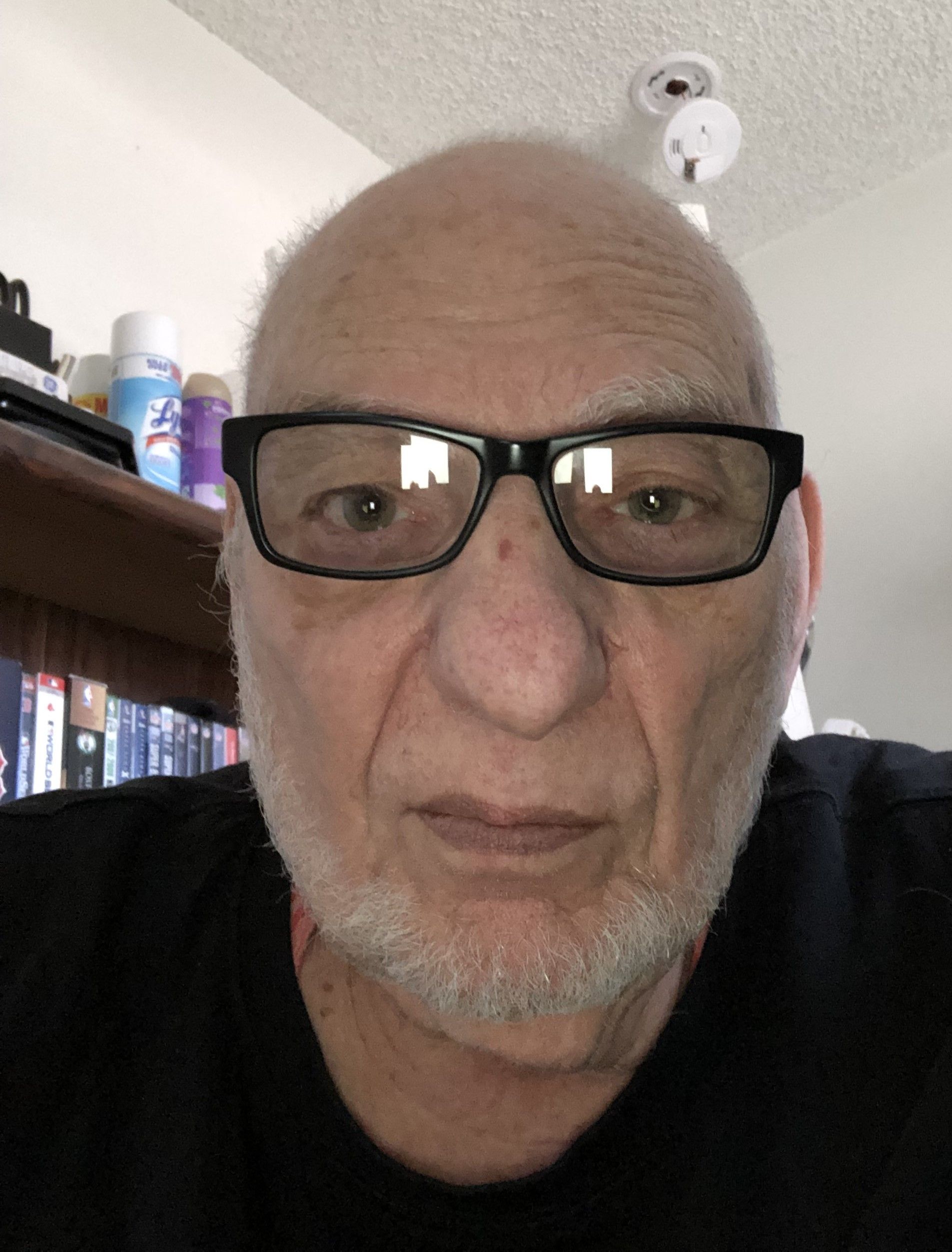
Dr. Jerry
I liked Terry Irwin’s story about bears in last week’s Thursday’s Columns.
It is a shame that so many people take such sightings for granted. Those who watch animals on documentaries, or visit the zoo, become complacent, and seeing animals in the wild is boring.
I think it is important that we continue to appreciate other species, especially when we see them in their natural habitat.
It is especially gratifying to see a mother and her cubs. As humans, we can relate to that. It provides a cross-species connection and an appreciation of how more difficult it is for them to survive than for us.
The movie series about The Planet of the Apes focused on the struggle for dominance between several ape species and the human species. That's OK for movie drama, but we humans don't have to assert our dominance. We need to find a way to relate to other species, marvel at their nature, and try to accommodate each other as best as we can.
We still have a lot to learn about our planetary cousins. So, when we can see animals in their habitat, appreciate and enjoy.