Thursday's Columns
August 6, 2026
Letters to the Editor
Dr. Jerry Gilbert
Retired Psychologist
Denver, CO

Dr. Gilbert
To the Staff of Westphalia:
Thank you for the interesting article last week by Joseph Schumpeter, extracted from his 1918 book: The Sociology of Imperialism.
My comments:
I agree that there are multiple motives for imperialism, which are well listed in the fourth group of his arguments. However, economics, security, & morality are often disguised excuses for imperialistic tendencies. It is important to maintain security, but this does not require control of other states. Imperialistic economics bypasses trade in favor of taking what you want.
The moral goal of liberating people from tyranny may be altruistic, but once they are liberated, it is not moral for the rescuing country to claim dominion over the nation they liberated. Claiming that the superior are destined to rule others is a fallacious argument that is based on selfishness.
I favor arguments that focus on human nature. I think that human beings have an instinctive goal of mastery. This can take many forms: learning new things, solving problems, inventions, athletic completion, & other ways that are not destructive or controlling. However, mastery can motivate some people to dominate, conquer, possess more toys without sharing, etc. These are not justified.
Safety & security are also fundamental human goals of self-protection & survival, but they do not justify imperialistic domination of other groups.
Imperialism usually refers to actions on an international level. However, the same motives can exist within one nation. The U.S. exhibited imperialism when wealthy landowners engaged in slavery & benefitted economically. But there was also a strong motive of superiority (a subtype of mastery). Nations based on an oligarchy, demonstrate similar motives (mastery & superiority) when they suppress the general public’s ability to increase its income & status.
Imperialism is understood when we examine fundamental characteristics of human nature.
Jerry Gilbert
--30--
Our
Story
by
Lawrence Abby Gauthier
ace reporter
The Westphalia Periodic News
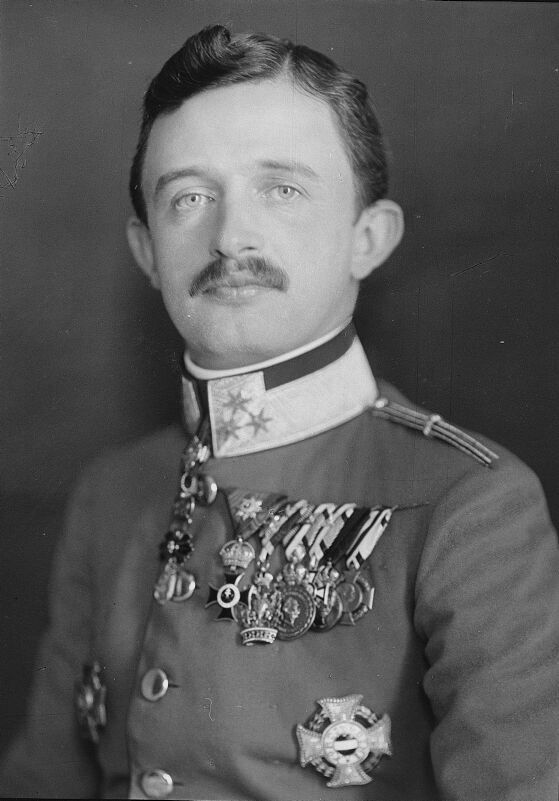
The Last Hapsburg King
In last week’s Thursday’s Columns, we ran an excerpt from Austrian economist Joseph Shumpter’s 1918 book, The Sociology of Imperialism.
In a nutshell, Schumpeter said that all the wars of history had been started by a self-identified, inbred class, or species of people just because they liked to do it so they could march at the head of a parade all decked out and cheered for leading victorious wars where all sides suffer.
Schumpeter wrote: “… actual history shows us people and classes who desire expansion for the sake of expanding, war for the sake of fighting, domination for the sake of dominating. It values conquest not so much because of the advantages it brings, which are often doubtful, as because it is conquest, success, activity…”
As an Austrian, himself, Schumpeter obviously had a particular family of kings in mind when he wrote that in 1918 — the Hapsburgs.
It was in 1918, in the aftermath of WWI, that the last Hapsburg king was marched out of Austria. He was just 31 years old at the time, married to the beautiful Zita of Bourbon-Parma, producing many heirs. He’d only been the king for two years, since 1916, in the midst of the horrors of WWI. He hadn’t gotten Austria involved in starting the war but became the king in the middle of it and was blamed for it and the war-weary Austrian people, led by radical socialists, decided that they’d had it up to here with kings. The young royal family was exiled to the Mediterranean island of Madeira while it was still more a prison than a popular vacation spot.
At the time, nobody in Austria had ever lived without a Hapsburg king before; not since 1273 when Rudolph the Hapsburg defeated Otakar of the Hohenstaufen clan to secure the crown of Austria.
Through negotiated marriages and the backing of the Catholic Church, by the 16th century Hapsburgs sat on the thrones of Spain, the Netherlands, wide swaths of France, the heartlands of Germania and most of Eastern Europe. Spanish galleons sailed to the New World to feast on its mountains of gold and silver and to the Pacific for tea — the Philippines are named for the Hapsburg king Phillip I of Spain. They were Kings of the World.
The last Hapsburg king was just 34 years old when he died on April Fool’s Day, April 1, 1922, an exile on the prison Island of Madeira – respiratory failure. Just as Hapsburgs had done for centuries, the last king, whose ancestors had run the Inquisitions, had devoutly and publicly practiced his Catholic faith. Decades later, he was beatified by the Catholic Church.
It’s ironic that part of the last Hapsburg king wound up where it did, where the family's journey had begun in the misty past of universal history, way back during Roman times while the Hapsburgs were still just an aggressive tribe of local enforcers, like Roy Cohn’s New York clients, bullying the people of a remote Alpine valley, taking because they could.
In what must have been a gruesome scene, surgeons observed by priests cracked open the chest of the last dead Habsburg king to remove his lifeless heart, which was sent to Switzerland to be entombed within Muri Abbey, a Benedictine monastery founded in 1027 by the local Hapsburg strongman at the time in the Canton Aargau, in the Alpine valley where the Hapsburgs first ruled. The rest of the dead king’s body remained on the Island of Madeira, where the young widow, Zita of Bourbon-Parma, was left behind to care for seven, and soon to be eight children.
Zita’s journey is a story to be told. She remained a widow for 67 years, wore black every day, escaped the Nazis by making it to America in time. Her children had more children and their worldwide web of cousins had more children and today there must be thousands and thousands of Hapsburgs in the world, but no kings, just the lingering hallucination of a paradise lost.
--30--