Thursday's Columns
August 20, 2026
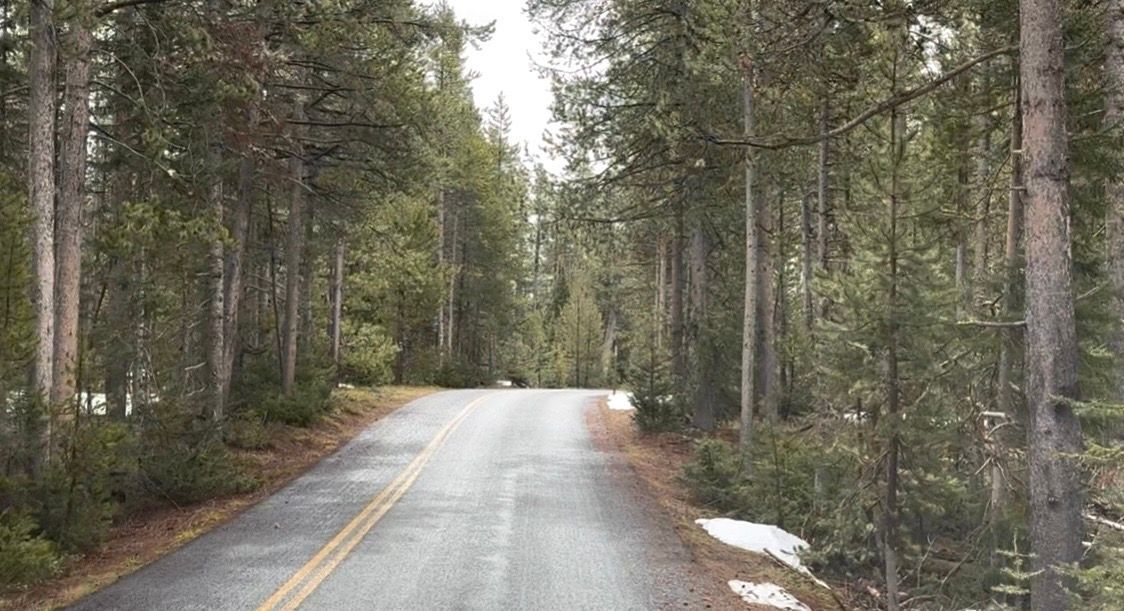
Jenny Lake Scenic Drive
Grand Teton National Park
Photo by Terry Irwin
That don't impress me much
by Terry Irwin
Denver Confluence Writers
Along the base of the Teton Range, in the heart of the Grand Tetons are three adjacent, glacially-formed lakes. The middle lake is String, the smallest of the three, so named for its narrow, unique shape. To the north is Leigh Lake, named for a 19th century trapper, Richard “Beaver Dick” Leigh. The name for the southern lake is for Leigh’s beloved wife, Jenny, a local Shoshone woman. Her indigenous name has been lost to history.
The naming of lakes for Jenny and Richard was an honor granted by Ferdinand Hayden during the Hayden Geological Survey of northwestern Wyoming in 1871. For generations, Jenny’s Shoshone people had ties to the area. Jenny’s knowledge about the land and its environment proved invaluable to the surveyors. Jenny’s husband, Leigh, provided expert experience as a scout and guide.
During the Expedition, as new landmarks were discovered, place-names were almost exclusively doled out to team members. By breaking protocol, Hayden’s actions demonstrated how much he valued the crucial role the couple had contributed to the success of the expedition.
Spanning out from each of the three lakes are a number of excellent hiking trails. These lead into Cascade and Paintbrush Canyons, where, as a teenager on family vacations, I slid down lengthy snowfields with my cousins in the middle of summer.
One of my favorite jaunts in the area is a one-way paved road (bicycles excepted), a mere three miles long and called Jenny Lake Scenic Drive. It meanders from grassy meadow into a coniferous forest and emerges out into sagebrush flatlands. Most people drive the route in less than 7 minutes. At our preferred pace, it takes us almost twenty. It might be the reason we’ve seen black bears, red fox, white-tailed deer and a young grizzly along the route. The fact that John and I spot two Ruffed Grouse on the road had nothing to do with our speed and everything to do with the birds’ antics.
Ruffed Grouse are medium-sized birds, slightly larger than a pigeon. They feed on flower buds, tree catkins and green leaves, occasionally insects and are apt to be solitary. I had never actually seen one in the wild, let alone two of them together. Their mottled coloration of grey, tan and brown feathering makes them masters of camouflage and difficult to spot in their forest habitat. The male is often differentiated by a darker-brown band splayed across the width of its tail feathers.
The reason we see these two birds at all is because they are in the middle of the road. Usually shy birds, they seem to take no notice of us. As there are no other vehicles behind us, we stop to watch them.
The name Ruffed comes from the grouse courtship display. The male fans his feathers in such a way that it creates a thick ring or “ruff’ around his neck, thereby increasing his overall stature.
His most impressive act might be his unique drum solo which he uses to attract females and claim his territory. This comes from the effort the male makes in flapping his wings so vigorously it creates a vacuum which sounds like drumming. What starts out as one drum thump, picks up speed with every successive wing beat, until the male is flapping 50 wing beats in a matter of ten seconds. It’s an impressive feat for such a small bird.
However, this isn’t the behavior we see before us on the road at Jenny Lake. At first, the male looks injured, perhaps staggering, his wings flailing. He is tilted over to one side, emitting a slight guttural, ratcheting sound. Even though the birds are in close proximity to each other, the female hen seems nonplussed by his behavior. She pecks away at edibles, slowly moving across the pavement. As the female continues, she eventually passes right by the male until he is behind her. He rallies, collects himself and scurries around in front of her. He stops, and facing towards her, begins his erratic flailing once again.
This activity continues. It looks like an odd game of leap frog except the male seems to be the only one playing. It can take an immature male grouse a very long time and much effort to master the art of drumming. It occurs to me that this is what we’ve been watching, a young male trying to make a good impression and the hen’s just not buying it.
Ever-so-slowly the pair make their way across the road and into the forest. The last we see of them, the hen is still pecking at the ground, still ignoring the male while he continues fanning out his feathers, running catch-up in semi-circles around her. Eventually, we lose sight of them with their ingenious camouflaging.
I don’t know whether the male eventually succeeds in impressing the hen or not. As we drive away, I’m smiling while in my head I can hear the voice of Shania Twain singing a refrain from her song, “That Don’t Impress Me Much.” That left me wondering if he ever did.
--30--
Our
Story
by
Lawrence Abby Gauthier
ace reporter
The Westphalia Periodic News
Every morning for months I’ve been stepping outside to our backyard patio to face my enemy — the sun, in a cloudless sky, the air heavy with the smoke of fires in the mountains and foothills. A hundred degrees by noon. Day after day, week after week, month after month. Suburban lawns burnt to a brown crisp.
Since the beginning of summer, we’ve only had a day or two of a sprinkling of rain, a dusting, like to taunt us.
The City has imposed “water restrictions” and has asked residents to report neighbors with green blades of grass.
It’s the same all across America’s desert West. Reservoirs are going dry. The Colorado River can’t keep up. The sprawling metropolitan areas that the river nurses — Las Vegas, Los Angelas, Pheonix — will have to empty out in a mass migration of people back to where they came from, where the American Dream was born in the watered lands east of the Mississippi. A Steinbeck scene in reverse, right out of “The Grapes of Wrath.”
A steady stream of Wall Street gurus, street corner prophets and global warmingists on YouTube videos scream dire warnings. Collapse is imminent. It’s going to be the end of a Way of Life. Bye Bye Miss American Pie. I tell Culley Jane and the kids that we could all go up north to the U.P., nestled into the Great Lakes, if that’s what it came down to. I have family and connections there. I know the lay of the land. Capone had a place in the U.P. where he’d go to hide out when things got too hot in Chicago. Grandpa “Babe” always said it was ok to shoot a deer out of season if the family needed the meat. I’m almost 80 years old. A move like that could kill me.
But then, this past week, the Heavens heard the cries of golfers putting on parched brown greens and the prayers of dryland farmers out on the plains and — in an act of compassion and chance — relented to open wide the gates.
On Friday, temperatures plummet; gale force winds swept down off the mountains; lightning and black clouds booming thunder; torrential rain mixed with tiny white pellets of hail. The deluge continued for hours before quieting down to an overnight drizzle.
The storm returned on Saturday. The street in front of our house was a raging river. I told Culley Jane that if it didn’t let up we’d have to build an ark to get to higher ground. “Good,” she said, “we can take the cats.”
By Sunday morning, the storms had passed. I went outside to the backyard patio to take my day’s first coffee. The air had been washed clean of its gritty smoke and smelled like freshly washed sheets. The sun was unthreatening, floating in the sky with wispy white clouds like nothing unusual was going on.
Something caught my eye, but first out of the corner of my eyes. I turned in the direction of the backyard lawn and I could see it. As long as I kept quiet and watched my breath, I could see it. Emanating out of, and weightlessly hovering a foot or two above the soggy brown grass of the backyard lawn was an auric field of green. Pulsing with organic life.
I grabbed my iPhone and took a picture.
In the picture you can’t see the green auric field hovering above the stressed-out lawn. But I saw it, so I know it’s real.