Thursday's Columns
February 19, 2026
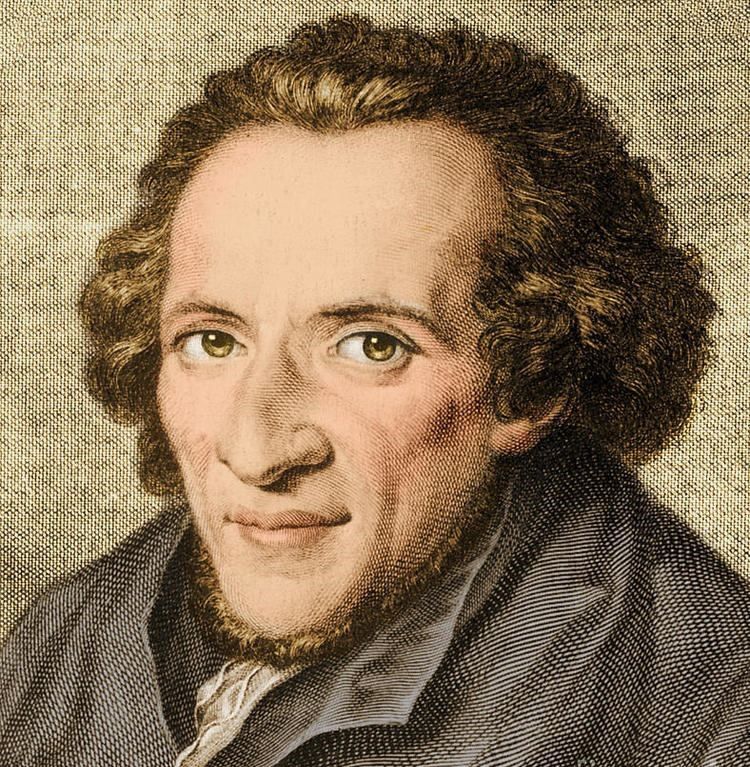
Moses Mendelssohn (1729 - 1786)
Father of the "Jewish Enlightenment"
Our
Story
by
Lawrence Abby Gauthier
ace reporter
The Westphalia Periodic News
Over the years, I’ve purchased and downloaded onto my iPhone dozens of my old all-time favorite songs, from Judy Garland’s “Over the Rainbow” and Dave Brubeck’s “Take Five” to Glenn Cambell’s “Wichita Lineman” and Nat King Cole singing “Get Your Kicks on Route 66.”
It was late at night. Culley Jane and the cats were already sleeping upstairs. I like listening to my old favorites late at night. I have Bluetooth wireless headphones so’s not to disturb the quiet of the household.
I started listening to Dan Seals and Marie Osmond singing “Meet me in Montana.” Suddenly, I was in Germany. It was the 18th century. A hunchbacked peasant boy was entering Berlin through the Rosenthaler Gate, the one gate into the city reserved for cattle and Jews.
I’m sure it was related to what had happened earlier in the day.
I got an email from Brian Hyland.
Brian Hyland runs a public relations company in New Jersey. We first connected last year when my nose for news first began to pick up the scent of a big story that mainstream news was by and large ignoring — the Rare Earths story. We had to have Rare Earths to build everything from bombs to flying cat toys and China controlled the world supply. The geopolitical implications were epochal. Until we got serious about producing our own, our future would be out of our hands. It seemed so obvious to me that I figured others must see it too. I started digging, looking for somebody who knew what was going on. Somebody on the inside. Somebody like a CEO.
Searching the internet, I came across the name of a company that sounded promising, USA Rare Earth, Inc. It sounded like an up and comer. A new hot stock. Listed on NASDAQ as USAR, in March it was selling for under $6 a share, but by August, when I started nosing around, it was hovering around $20 and rising.
I went to the company’s website to get a telephone number. A nice lady answered. I told her I was a newspaper reporter with the Westphalia Periodic News in Denver.
“Let me put you in touch with the person who handles our media relations,” she said.
That’s how I met Brian Hyland.
Unlike most media relations people, Brian didn’t try to get rid of me as soon as he learned I wrote for a publication that only a handful of people in the world even knew exists.
Instead, he listened to my song and dance about why I thought it was such a big story involving the shape we make of the world to come and why I needed to talk to the company’s CEO who must have some inkling of the path we’d need to follow to get to where we wanted to go.
Unlike other media relations people after hearing one of my spiels, Brian didn’t say he had to get to another call and never get back to me. He listened. And when I was done, he said: “Where you from?”
He learned about me and I learned about him… He grew up in New Jersey. His dad was a longshoreman. Catholic family. Went to a Catholic university. Fresh out of college, he got started in public relations working for a large Catholic diocese before starting his own company that he ran out of his home in New Jersey.
We shared Catholic stories only those who’d been on the inside would get.
I told him about my experiences at the Jersey docks when I was a trucker. “Maybe you met my ol’ man there,” he said.
USA Rare Earth, Inc. was one of his bigger clients, but not the only one and he said he was doing all right. He said the next time he got to Denver we should get together over a few beers.
Brian didn’t set up on-line in-person interviews with the CEO for every reporter who called him. But he did for me, which I wrote about in a column last fall. At the time, in October of 2025, USAR was up to $40 a share on the NASDAQ. After my story came out, however, it began to drop and has kept dropping. Last I checked, it was under $20 a share. In December, I emailed Brian and told him I was sorry and felt guilty for crashing the market. We laughed. Catholics feel guilty for everything.
That’s when he told me he was no longer with USA Rare Earth but had another client he thought I might be interested in, a company that wants to reprocess spent nuclear fuel rods, the dangerous “waste” from nuclear power plants that we were told we’d have to live with for countless generations.
Brian said his client wants to turn one generation’s waste into a fountainhead of abundance for the next. The spent rods could be a gold mine. The world is going nuclear. We need more energy to get to where we want to go. Fusion is still a ways off. China is already mass producing fission reactors on assembly lines with Rare Earth robots. Now that the new international payments system is taking shape, BRICS nations can buy Chinese-produced reactors with their own national currencies, bypassing the decision makers on Wall Street and the City of London. More reactors meant greater demand for reactor fuel. The discarded rods are full of nuclear fuel. They still contain over 90 percent of their original energy, plus lots of valuable Rare Earth elements and a cloud of unexplored isotopes, one of which might one day turn out to be a cure for old age. Wouldn't that be cool. A reason to hope that we'll never go away. I should write a sci-fi column about it.
“Yes,” I told Brian. “I’d like to interview the CEO.”
“Great,” he said. “He’s really busy, but I’ll see what I can do. And, oh, by the way, did I tell you that he’s a Jewish Rabbi?”
That was last December.
I didn’t hear from Brian again until I got the email from him this past week. He said the rabbi had agreed to do an on-line in-person interview with me, maybe in early March. I wondered if Brian had shown him some of my columns.
Right away, I started thinking about what I wanted to ask the rabbi. Like, why was he doing it? Was it all for profit? I can’t imagine that a rabbi’s regular salary was all that great. Did he just want to be rich? Or was religion involved? After all, he was a Jewish rabbi.
I’d never interviewed a rabbi before, nor had ever even met one like in a bar as far as I know. I’ve been on the inside of Christian churches and a few Buddhist monasteries, but never a mosque or synagogue.
Most everything I know about Jewish life and their ways of day-to-day thinking I learned from a Jewish woman I met on a dating site while I was still working as an over-the-road trucker.
We started meeting at a coffee shop whenever I had home time in Denver. We became friends. But it was more than that. We shared what made us different.
She had, as she put it, grown up in a “strictly Orthodox Jewish family.” I had grown up in a strictly Orthodox Catholic family. Gradually along her path she had “jumped the Fence around the Torah.” Gradually along my path I had jumped the Fence around the Baltimore Catechism. What remained was common ground, echoes of our past. She still cooked Kosher meals for special occasions. I still made Grandma Thibault’s French meat pies for Christmas Eve.
She had been born a Mendelssohn, so that’s how I first heard about Moses Mendelssohn, the hunchbacked boy who’d walked away from his German shtetl to enter Berlin through the Rosenthaler Gate, destined to became the recognized father of the Haskalah, or the “Jewish Enlightenment,” which flourished in Germany for two centuries before Hitler came along to put out the flame.
She told me that she was a cancer survivor.
She talked all the time about a deep Jewish morphogenic idea called "Tikvah," which she said on one level meant "hope." But more than that, she said, more like an obligation to share it, to bring hope to others... a reason to hope that we'll never go away. Not really.
Her cancer returned.
Only once was I able to be there as she lay dying beneath a white sheet. Like when I was a VA nurse, I massaged the wasted muscles of her calves. Wordlessly, she said she understood that I had work to do.
I was parked for the night at a truck stop on I-90 in Montana when I got the call that she had died, peacefully.
I put my Bluetooth wireless headset on and played Dan Seals and Marie Osmond singing “Meet Me in Montana.” I shed tears but I wasn’t sad. She had left a gift. I knew what I wanted to ask the rabbi… the Haskalah, Tikvah. What did they have to do with business?
--30--
The
Philosophy
Couch
Dr. Jerry Gilbert
Clinical Psychologist
(Retired)
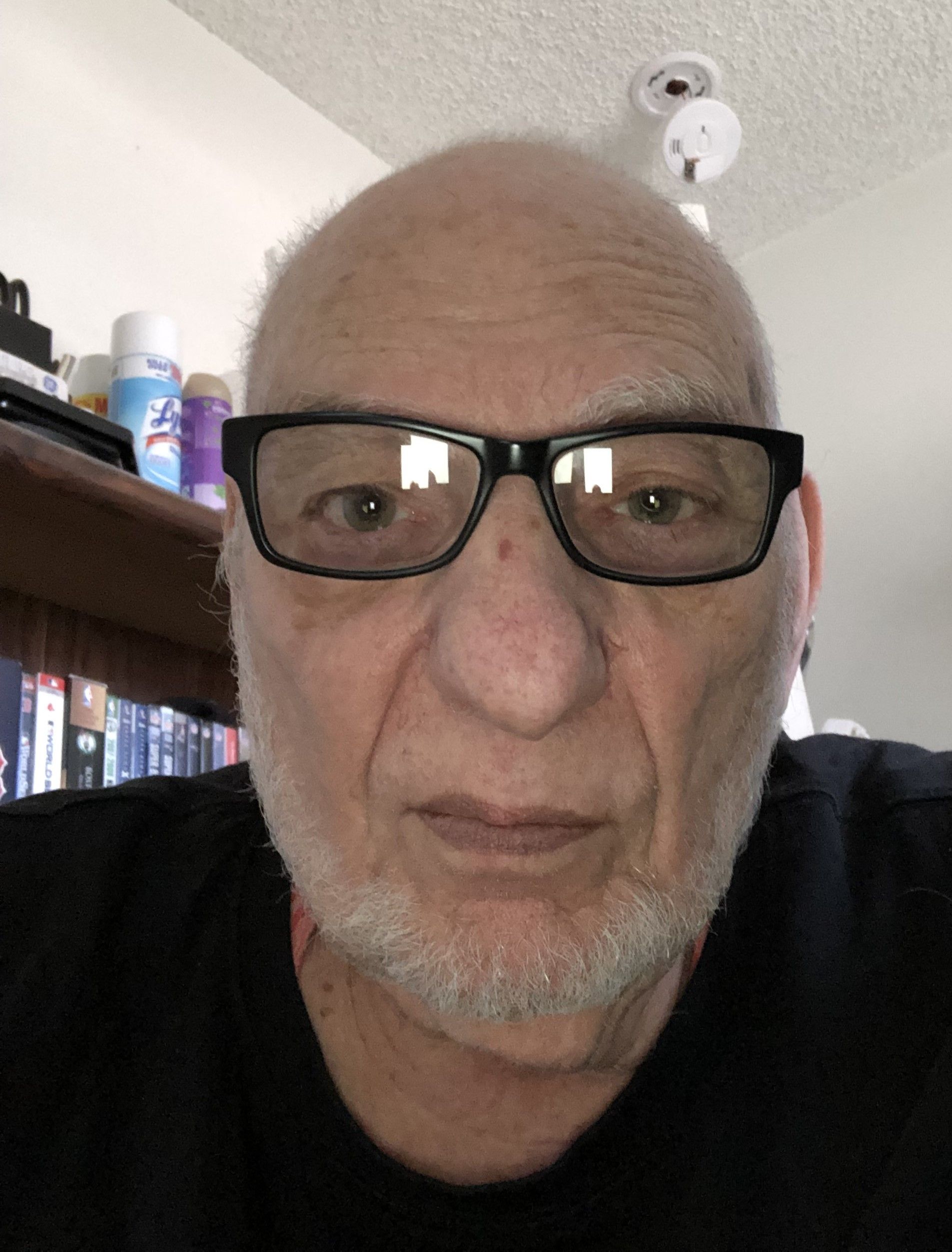
Dr. Jerry
I’m thinking about last week’s “Our Story” column by the Ace Reporter where Leibniz and his idea of “monads” is discussed.
It has been a while since I read about Leibniz and monads. So I began studying. I relied on secondary sources since I didn’t read anything Leibniz wrote.
The Ace Reporter tried to distinguish monads from atoms, so I will focus on that.
It is important to remember that Leibniz believed that a god is the source of all things, and he tried to reconcile his philosophy with Christianity. So, his concept of monads reveals a supernatural bias.
Leibniz was a brilliant person and mastered many subjects. However, there are some ideas which seem to me to be inconsistent and lacking in clear reasoning. If I had read his books, perhaps all would be clearer.
Perusing the internet, I gather that in Leibniz’s philosophy, monads are simple, indivisible substances forming the basis of all reality. They unite simplicity and activity, existing without parts yet generating change. They are non-extended and “immaterial,” and do not occupy physical space. The search for something permanent beneath change can be so powerful that it sometimes takes the form of a religious impulse. The purpose of the concept of the monad is to define what is metaphysically prior or basic. The monad is nothing other than a simple substance which enters into composites; simple, that is to say, without parts. The monad does not have an extension in space. It takes up no physical volume. Simple, immaterial, non-extended, indivisible entities are the condition of the existence of composed, material, extended, divisible entities.
So, I wonder, to consider monads a substance is to liken, rather than differentiate them from atoms. How do immaterial monads influence the existence of composed, material, extended, divisible entities?
Monads are not static points; they are sources of energy and change within the universe, though their powers are finite because they are created beings. I assume he meant created by a god, but why call them beings?
Perhaps monads can be understood as centers of force rather than material particles, not physical forces like gravity or magnetism.
Monads have no parts but still exist by the qualities that they have. These qualities are continuously changing over time. They are also not affected by time and are subject to only creation annihilation.
But I wonder, if monads are not affected by time, then what does it mean to say they are continuously changing over time? How would an immaterial monad be annihilated? Monads are centers of force; substance is force, while space, matter and motion are merely phenomenal. How can a substance and a monad both be forces? Are they different forces? I assume that by “phenomenal” he meant subjective. This implies that monads are not subjective. How can this be verified? Does it depend on faith like religion?
I read that by virtue of the principle of “pre-established harmony" each monad follows a pre-programmed set of "instructions" peculiar to itself, so that a monad "knows" what to do at each moment. By virtue of these intrinsic instructions, each monad is like a little mirror of the universe. But this is very confusing. “Pre-programmed” and “instructions” imply a deterministic philosophy, which could have been arranged by a god; but Leibniz’s philosophy does not seem deterministic, since he considers monads to be metaphysical.
These are my humble opinions. The bottom line is that Leibniz and I share a common goal: What is the fundamental nature of reality?
--30--
Letters to the Editor
Leonore Dvorkin
co-owner/editor-in-chief
DLD Books of Denver
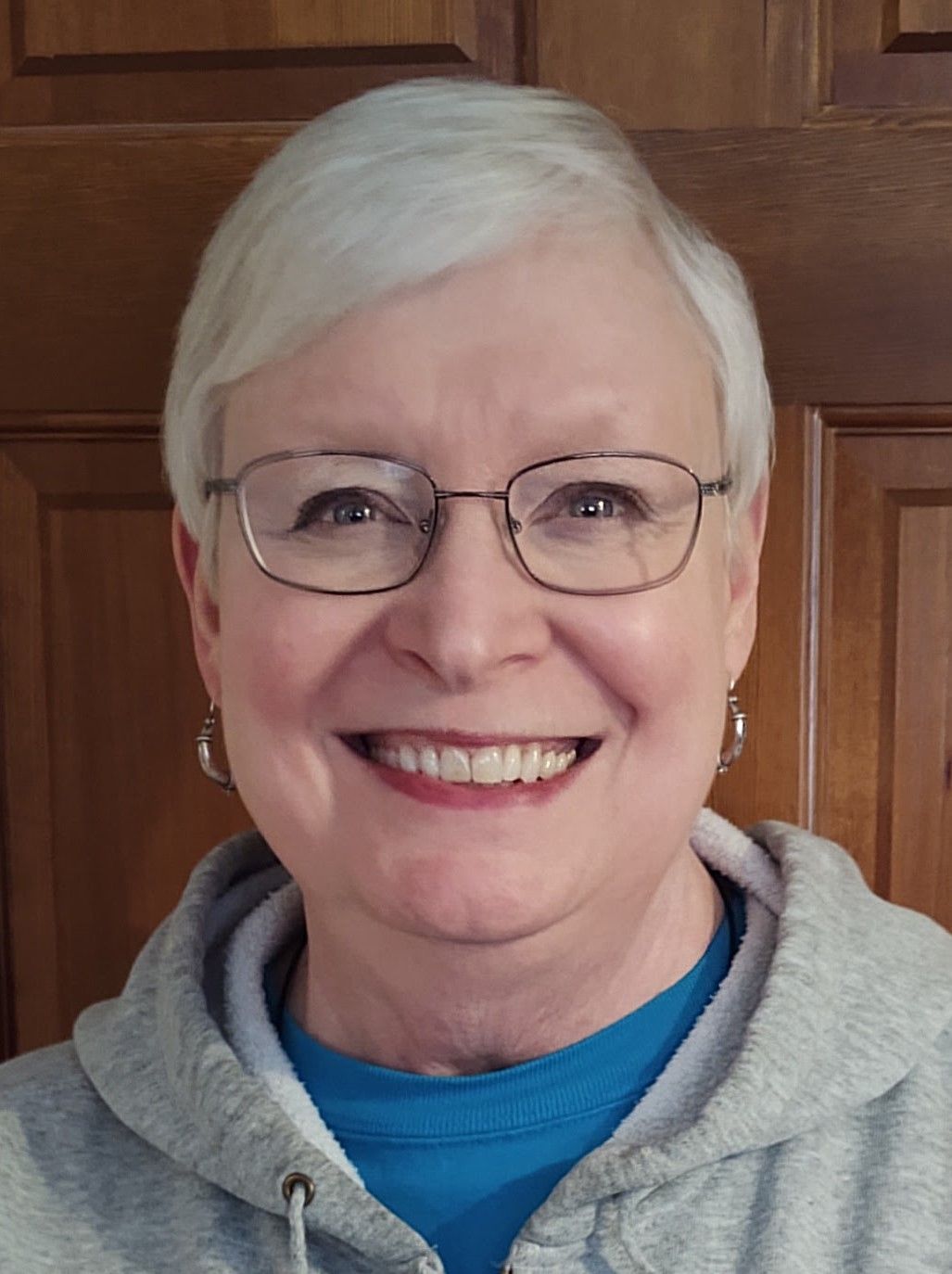
Leonore
Dear Editor:
Regarding your ace reporter’s column last week about meeting that young, educated Arkansas guy in a bar… cool discussion. I noticed the guy had lots of tattoos. Never judge a book by its cover, as they say.
Once at a truck stop somewhere in the South, we saw that the 20-something gal at the counter, with tattoos, a nose ring, and spiky hair, was reading a book of Latin poetry, I mean in Latin. Wow.
However, tattoos mess up your health, including your brain. They are super bad for you.
Here is the latest on them: Tattoos pose health risks primarily through skin damage, infection, and potential immune system reactions to ink ingredients. Common issues include allergic reactions, bacterial infections (e.g., staph), and keloid scarring. Furthermore, tattoo ink, which may contain heavy metals or toxins, can accumulate in lymph nodes, potentially affecting the body's immune response.
There is lots more alarming info about them online, including about how they can affect the brain.
Good thing I have never considered getting one, as I consider them very unattractive. Also, it's a good thing that of course I'm not looking to date anyone these days! I think I'd have a hard time finding someone with no tattoos.
Sincerely:
Leonore Dvorkin